Healthy Feet as the Foundation of Natural Movement, Pelvic Position, and a Healthy Back
Wideez was born from the aim of giving feet back their natural anatomy, freedom, and function. We believe the foot is not just a support for the body. It is the foundation of the entire locomotor system. In everyday life and during intense sport, feet must function freely, the way biological evolution intended.
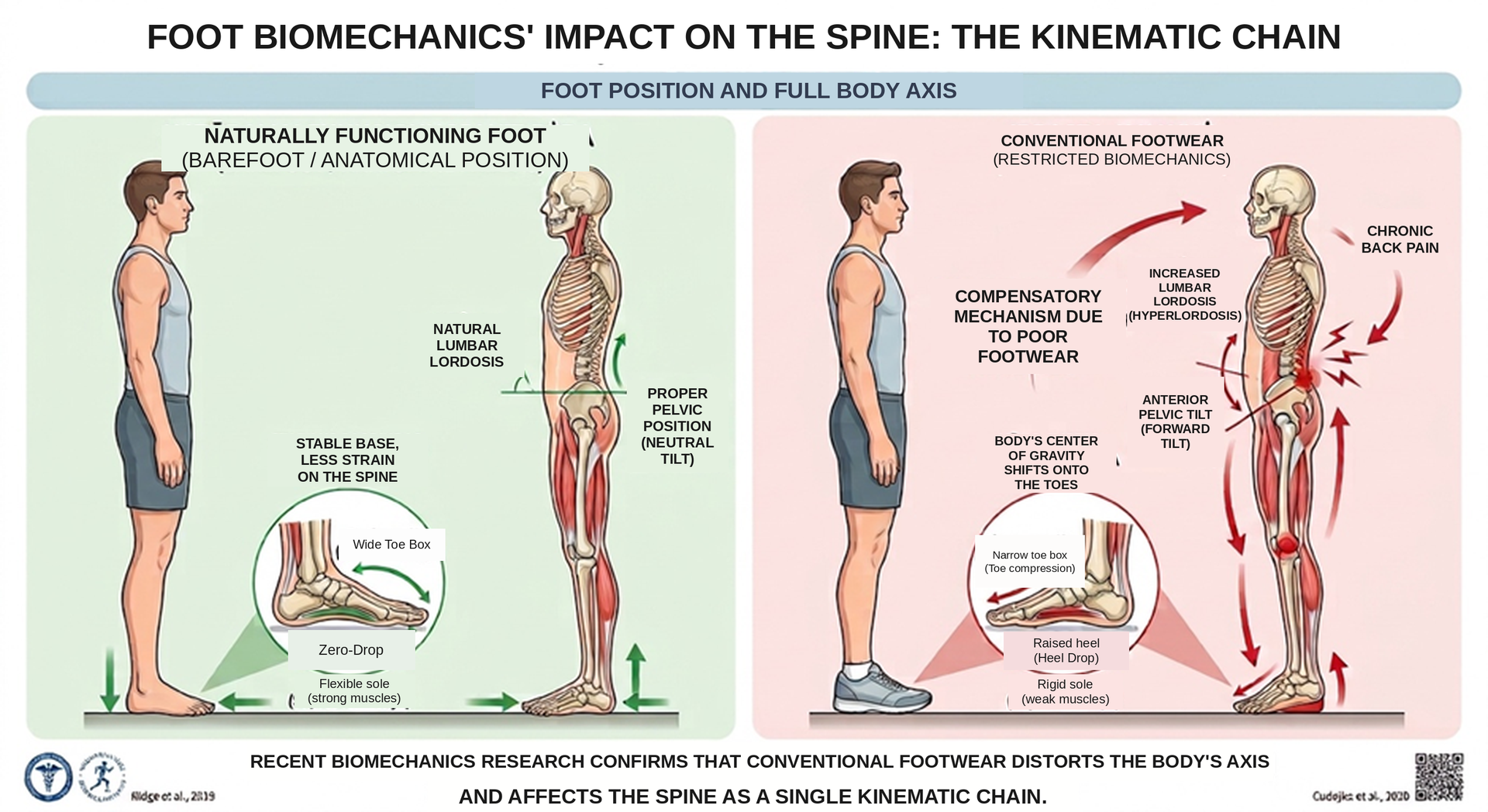
The latest biomechanics and physiotherapy research confirms that conventional footwear with a narrowed front section (toe box) and a raised heel (heel drop) distorts the body's natural axis from the feet all the way up to the spine (Ridge et al., 2019; Cudejko et al., 2020).
From the Foot to the Back: The Kinematic Chain, Pelvis, and Lumbar Lordosis
The body works as a single kinematic chain. When footwear changes the foot's natural support, the changes spread upward in a chain reaction:
- Anterior Pelvic Tilt: When wearing shoes with a raised heel, the body's center of gravity shifts forward. To keep its balance, the body compensates for this deviation by tilting the pelvis forward (Cudejko et al., 2020; Franklin et al., 2021).
- Increased Lumbar Lordosis (Hyperlordosis): When the pelvis tilts forward, the curvature of the lumbar spine (lordosis) automatically increases. This position causes constant overload of the lower back muscles and the intervertebral discs.
- Chronic Back Pain: Over time, this compensatory posture becomes one of the main causes of chronic low back pain and biomechanical imbalance among adults (Franklin et al., 2021; Ridge et al., 2019).
Foot Deformities and the Latest Statistics
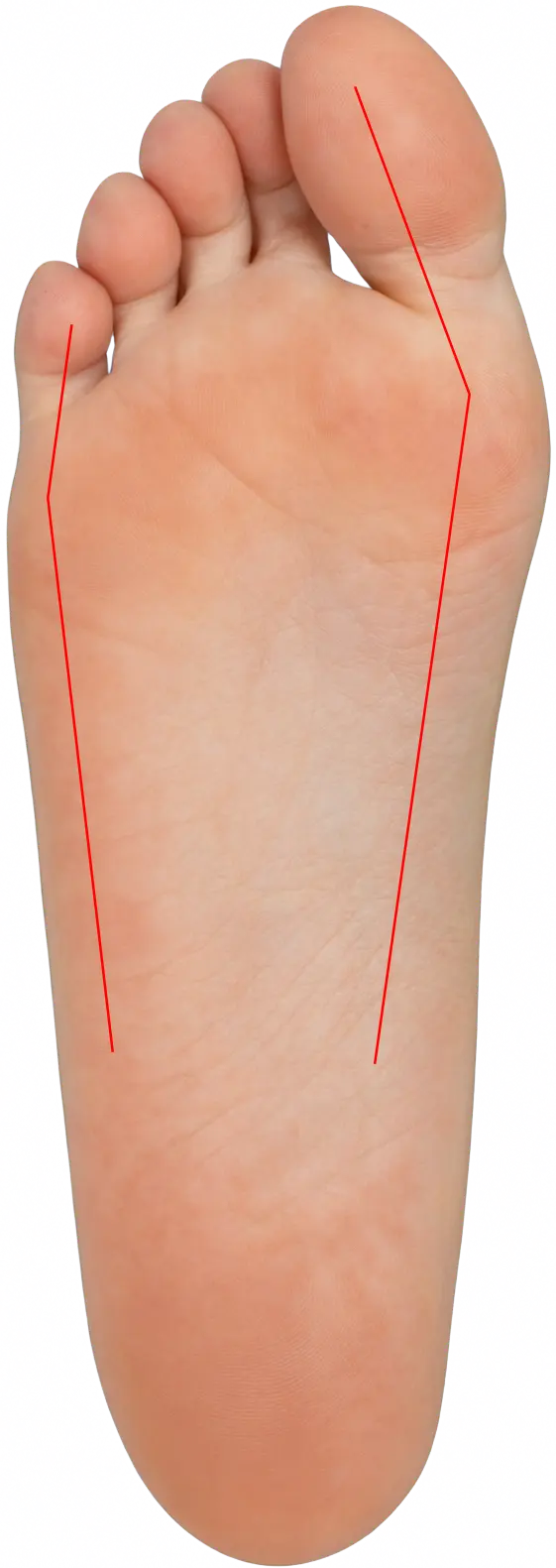
One of the most striking consequences of narrow footwear is Hallux Valgus (deformity of the big toe, or a "bunion"). Recent epidemiological studies and meta-analyses reveal worrying statistics:
- About 23% of the general adult population, and up to 36% of older people, have a diagnosed Hallux Valgus deformity (Deschamps et al., 2021; Ray et al., 2022).
- This condition is found roughly 2–3 times more often in women than in men, and the main external factor contributing to it is narrow footwear that squeezes the toes (Ray et al., 2022; Yatsuya et al., 2021).
- The deviation of the big toe weakens the arch of the foot, reduces the support area, and impairs stability during strength exercises or simply while walking.
How Does Barefoot (Anatomical) Footwear Work?
| Shoe feature | Biomechanical effect on the body's axis and feet |
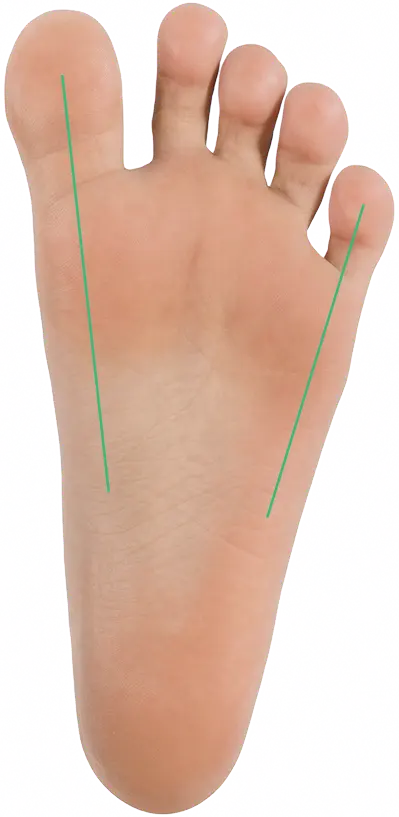
| Wide Toe Box | Lets the toes spread freely, provides support for the big toe, and protects against the development of Hallux Valgus. |
| Zero-Drop | Restores the natural position of the pelvis, reduces excess lumbar lordosis, and relieves tension in the lower back. |
| Flexible, thin sole | Activates and strengthens the deep muscles of the foot and improves proprioception (the sense of joint position). |
Our Mission
Our mission is to educate, inspire, and give the freedom to move without restrictions. We don't believe in compromises between aesthetics and anatomy. Our goal is to return the natural form and function to feet, helping to restore correct pelvic biomechanics, protect the spine from excess load, and prevent chronic back pain.
We responsibly select scientifically grounded footwear that meets strict anatomical and biomechanical standards. We are here to help you take a confident step toward stronger feet, healthy posture, and the full joy of movement.
References
Cudejko, R., Gardiner, J., Akpan, A., & D'Aout, K. (2020). Minimalist footwear improves stability and foot strength in healthy adults: A systematic review. Gait & Posture, 81, 241–248. https://doi.org/10.1016/j.gaitpost.2020.08.102
Deschamps, K., Birch, I., Desloovere, K., & Matricali, G. A. (2021). The foot and ankle in total body movement: Kinematic chain and postural impacts of restrictive footwear. Journal of Foot and Ankle Research, 14(1), Article 33. https://doi.org/10.1186/s13047-021-00472-9
Franklin, S., Grey, M. J., & Wright, A. (2021). The effect of footwear drop on sagittal pelvic tilt and lumbar lordosis during standing and gait. Clinical Biomechanics, 84, 105325. https://doi.org/10.1016/j.clinbiomech.2021.105325
Ray, J. J., Friedmann, A. J., & Hansen, K. E. (2022). Prevalence, risk factors, and biomechanical consequences of Hallux Valgus: A systematic review of recent literature. Foot and Ankle Surgery, 28(4), 415–423. https://doi.org/10.1016/j.fas.2021.09.008
Ridge, S. T., Olsen, M. T., Bruening, D. A., Johnson, A. W., Ward, C. V., & Mitchell, U. H. (2019). Walking in minimalist shoes increases intrinsic foot muscle strength. Medicine & Science in Sports & Exercise, 51(8), 1757–1763. https://doi.org/10.1249/MSS.0000000000001973
Yatsuya, H., Tamakoshi, K., & Toyoshima, H. (2021). Footwear choice as a determinant of forefoot deformities and low back discomfort: A population-based cross-sectional study. BMC Musculoskeletal Disorders, 22(1), Article 512. https://doi.org/10.1186/s12891-021-04388-x